Grease Cleaning Pros provides across-the-country support for food-service kitchens that require Grease Trap Repair plus ongoing upkeep. Our staff of fully licensed technicians pairs precision monitoring with practical service. They handle everything from standard cleanouts through to complex fixes as well as system installations.
View Details About Grease Trap Pumping

Explore More About Grease Trap Pumping

Continue Reading About Grease Trap Cleaning
Proper handling of fats, oils & grease prevents pipe failures which can close down a kitchen for multiple days. Grease Cleaning Pros delivers real-world upkeep , scheduled every 30–90 day interval based on volume. They also provide sustainable options for waste cooking oil collection along with reprocessing into biodiesel.
Our method is rooted in construction and commercial plumbing trade proven practices. It satisfies local health & environmental regulations while keeping downtime low. For managers looking for dependable results and compliance, Grease Cleaning Pros delivers professional repair work, installation, and guidance. Which keeps kitchens operating smoothly.
Why Grease Trap Repair Is Critical For Commercial Kitchens
Dependable grease interceptor repair is crucial for maintaining a kitchen’s productivity. Trouble starts as soon as fats, oils & grease exceed 25% of the interceptor’s capacity. Fast response from seasoned crews ensures flow gets restored, preventing costly downtime.
Keeping Operations Moving And Avoiding Costly Downtime
Clogged drains and sluggish sinks are signs of equipment failure. Overlooking these symptoms may cause short-term shutdowns and costly fixes. Specialist grease-trap cleaning services deliver fast solutions, so that kitchens reopen quickly.
Routine servicing reduces clogs and malfunctions. Routine cleanings and inspections reduce the risk of unplanned failures, reducing emergency repair costs.
Meeting Local Health And Environmental Code Requirements
Local regulations call for verifiable service schedules and properly sized interceptors. Complete records kept by licensed techs are critical for inspections and compliance. Measuring FOG levels over time ensures kitchens stay within environmental standards.
Meeting maintenance requirements minimizes liability and preserves a facility’s reputation. Professional servicing speeds up permit renewals and health department inspections.
Environmental Benefits And Recycling Value
Reclaiming waste cooking oil reduces water pollution and reduces carbon emissions. It’s often processed into biodiesel, animal feed, and household products.
Vendors that provide grease interceptor repair services and used-oil pickup programs help food-service operators lower waste output. They capture value and hit sustainability targets, transforming disposal costs into environmental benefits.
| Common Risk | Impact | Prevention Action |
|---|---|---|
| FOG accumulation above the 25% threshold | Operational failure, slow drains, and odors | Scheduled commercial grease trap maintenance plus monitoring |
| Gaps in cleaning records | Penalties, failed inspections | Documented kitchen grease trap maintenance by licensed technicians |
| Improper used-oil disposal | Environmental damage, regulatory action | Partner with grease trap cleaning services that offer oil recycling |
| Mechanical damage or leaks | Expensive repairs, downtime | Timely grease interceptor repair and routine inspections |
Frequent Issues That Require Grease Trap Repair
Grease interceptors often hide problems until they trigger a major mess. Catching issues early helps keep kitchens operating smoothly and sidesteps costly emergency repairs. Below we cover typical indicators, structural issues, and the costs of putting off repairs.
Warning Signs Of Failure To Watch For
Persistent bad odors by the trap/interceptor commonly point to grease accumulation. Sewer odors can indicate solids trapped inside and anaerobic breakdown.
Slow drainage, multiple fixtures backing up, or gurgling from toilets while other fixtures run often points to a deeper buildup. Repeat clogs that come back after basic snaking commonly show hardened grease farther down the line.
Visible grease at the interceptor’s outlet, pooling water above the unit, and constantly greasy floors even after cleaning are major red flags. These indicators call for immediate grease trap repairs.
Structural And Mechanical Issues
Rusted lids and worn covers and failed baffles lower separation performance. Traps that are undersized or had poor installation let oils pass through into sewer lines.
Built-up solids and grease that has hardened can form blockages in pipes downstream. Removing years of buildup often calls for commercial hydro jetting at roughly 4,000 PSI to fully restore flow.
Licensed grease trap technicians assess structural issues and suggest specific repairs. Choosing reputable grease trap specialists helps ensure repairs meet local codes and protect kitchen operations.
Consequences Of Delayed Repair
Letting problems persist can escalate to mainline clogs and sewer backups. Unexpected closures for repairs reduce sales and disrupt staff schedules.
Enforcement penalties and brand damage can follow incidents when operations violate health and environmental rules. Fixes become more complex and expensive as grease solidifies and moves through piping.
Scheduled grease trap cleaning services along with timely grease trap repair minimize the likelihood of high-cost emergency calls. Putting money into scheduled maintenance with licensed grease trap technicians saves downtime and limits large plumbing campaigns.
| Concern | Common Indicator | Common Fix |
|---|---|---|
| Odors and drain smells | Persistent sewer/rotten odor near the trap | Pump-out, deep cleaning, and odor neutralization by licensed grease trap technicians |
| Slow draining and backups | Several drains slow or toilets gurgling | Hydro jetting plus pipe descaling; then scheduled grease trap cleaning services |
| Visible grease at the outlet | Floating grease and pooling water above the interceptor | Separator tune-up, baffle repair, or replacement by reliable grease trap specialists |
| Physical damage | Rusted covers, broken or missing baffles | Part replacement, reseating, or system upgrade handled by licensed grease trap technicians |
| Advanced pipeline buildup | Repeat clogs after snaking and hardened grease downstream | High-pressure hydro jetting and longer-term maintenance plan from grease trap repair professionals |
Grease Trap Repair
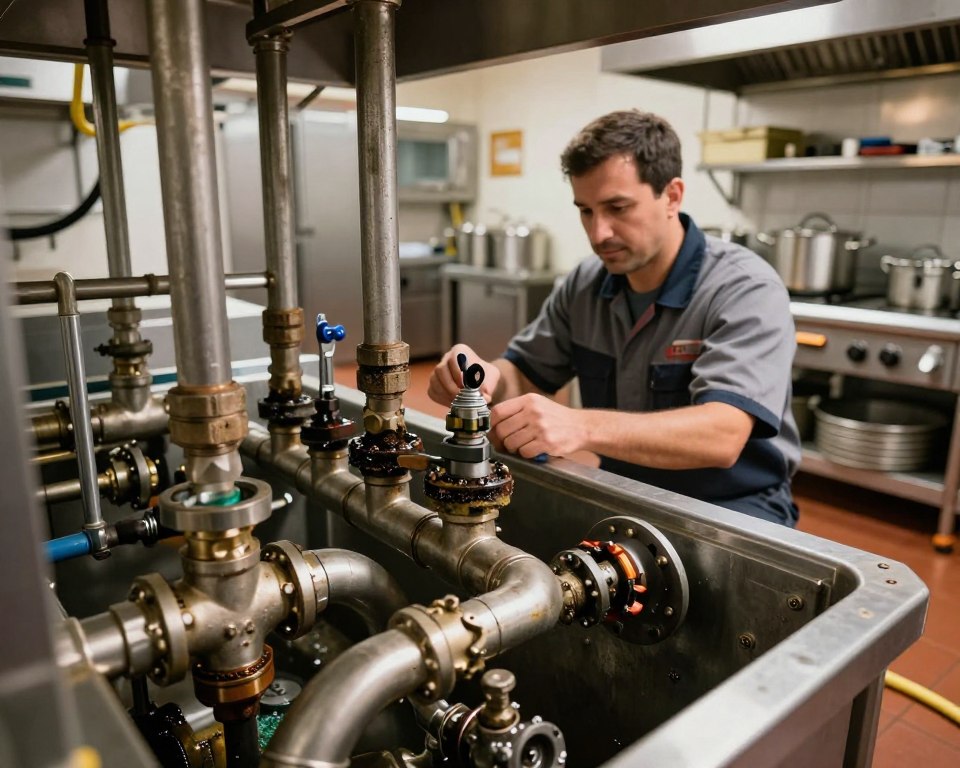
Successful grease trap repair service begins with a thorough assessment. Technicians first visually inspect lids, baffles, and pipes. They measure FOG levels and check downstream lines for accumulated buildup. Precision monitors track grease accumulation, so service is timely.
Diagnostics reveal the root causes, such as incorrect sizing or physical damage. That clarity guides whether a targeted repair or a more comprehensive intervention makes sense. Licensed professionals log their findings with reporting and photographs for owners and authorities.
Repair Methods And Best Practices
Typical repairs can include pump-out and cleaning, replacing worn components, and welding or sealing corroded points. Commercial hydro jetting is often used to clear hardened FOG inside pipes. Each approach works to restore flow and efficiency.
Best-practice steps include staying aligned with local codes and keeping detailed records. Scheduling repairs in off-peak windows keeps disruption minimal. Pairing repairs with preventive cleaning and monitoring reduces the need for repeat services. Using licensed technicians ensures compliance with standards and helps protect permitting status.
When A Replacement Or Professional Installation Is Needed
A replacement is necessary when there is structural damage, such as severe rust or baffles that are compromised. It’s also required when a unit is undersized or when repeated fixes don’t hold. In these cases, grease interceptor repair may not solve the problem.
Professional installation ensures correct sizing and placement. Low-volume kitchens need 20–50 gallon traps, whereas high-volume operations require 500 to 5,000 gallon interceptors. Hiring qualified crews for the installation reduces future issues and keeps you compliant.
| Problem | Common Repair | When Replacement Is Advised |
|---|---|---|
| Clogged outlet or pipe buildup | Hydro jetting, targeted cleaning | Repeated clogs caused by downstream buildup even after cleaning |
| Rusted baffles or broken baffles | Baffle replacement and welding seals | Extensive structural corrosion affecting separation |
| Damaged lids and seals | Seal replacement, lid repair | Cracks in the sump that compromise integrity |
| Undersized unit relative to kitchen volume | Short-term maintenance plus monitoring | Upgrade to larger interceptor with professional installation |
| Continual FOG accumulation | Higher cleaning frequency plus monitoring systems | Move to a correctly sized grease interceptor |
Owners should consider long-term performance when choosing between repairing and upgrading. For multi-faceted locations, obtaining quotes for repair and installation is smart. Certified teams offer end-to-end interceptor management and ongoing service plans for steady kitchen operations.
Maintenance, Cleaning, And Preventive Services From Grease Cleaning Pros
Routine maintenance is key to keep kitchens running efficiently and avoiding high-cost backups. Grease Cleaning Pros crafts maintenance plans that match each facility’s needs. These plans help operators meet local requirements, reduce smell complaints, and avoid emergency call-outs.
Regular Cleaning Schedules And Custom Maintenance Plans
Recommended frequency for pump-outs and cleanouts varies from 30 to 90 days, depending on kitchen output. High-volume fry kitchens typically require monthly servicing, whereas lower-volume cafés often only need quarterly service.
Grease Cleaning Pros assesses FOG output levels, reviews kitchen volume levels, and references city codes to design tailored schedules. Each schedule includes routine pump-outs, inspection summaries, compliance documentation, and emergency response availability.
Advanced Cleaning Methods And Equipment
Techs use vacuum/pump trucks, along with hydro jetting to around 4,000 PSI, to clear pipe walls and internal trap surfaces. These methods support service while open with minimal disruption.
Digital monitoring and tracking systems record FOG levels over time and service history. This visibility prevents overfills, prolongs equipment life, and supports steady operations.
Additional Services: Used Oil Collection And Sustainability Options
Used cooking oil collection directs oil into biodiesel and other reuse channels. Clients may receive rebates or revenue from oil destined for recycling.
Sustainability initiatives center on responsible disposal, lower greenhouse gas emissions, and best practices to minimize FOG generation at the source. These initiatives complement cost-effective grease trap solutions and routine servicing to lower ongoing costs.
| Service | Service Frequency | Benefits | Ideal For |
|---|---|---|---|
| Scheduled Pump-Outs | 30–90 days | Helps prevent backups, supports compliance | Restaurants, cafeterias |
| Hydro Jetting & Vacuuming | As needed or during service | Clears buildup, restores flow | High-output kitchens |
| Digital FOG Monitoring | Continuous monitoring or periodic checks | Predictive maintenance, compliance logs | Multi-location operations |
| Used Oil Collection | Weekly through monthly | Recycling revenue and lower emissions | Any kitchen producing cooking oil |
| Customized Maintenance Plans | Ongoing | A tailored schedule plus emergency support | Operators seeking cost-effective grease trap solutions |
Combining grease trap cleaning services with planned maintenance lowers downtime and keeps kitchens compliant. Routine attention to commercial and kitchen grease trap maintenance protects equipment and backs sustainable operations.
Choosing Reliable Grease Trap Specialists And Affordable Solutions
Selecting the right team streamlines upkeep and emergency handling. Choose companies with verifiable credentials and real-world experience with commercial kitchen systems and large grease interceptors. This combination helps ensure prompt, compliant service when time is of the essence.
What To Look For In A Service Provider
Ensure the service company is licensed and insured before scheduling work. Licensed techs help ensure adherence to local health and environmental codes. Request service logs that detail regular monitoring, hydro jetting, and up-to-date equipment.
Verify coverage for nights and weekends and emergency call-outs. A vendor that communicates clearly and tailored consultations minimizes downtime and protects opening schedules.
Cost-Saving Strategies And Value-Driven Options
Preventative maintenance greatly reduces emergency expenses. Scheduled pump-outs and monitored schedules lower the risk of mainline blockages and costly shutdowns. Bundled plans for repair work, cleaning, and oil collection can be better value than one-time service calls.
Recycling used cooking oil can reduce service fees. Work with providers that show savings and use transparent invoicing to track return on investment.
Case Examples And Proven Results
Quick resolutions for critical issues help ensure restaurants stay open on time. Reports outline timely clearing of backups and on-schedule interceptor replacements, protecting day-to-day operations during openings and inspections.
Infinity Group Construction demonstrates major gains from proactive interceptor management. Grease Cleaning Pros employs precision monitoring, professional grease trap installation, hydro jetting, and used-oil recycling. They deliver affordable solutions with proven results.
Conclusion
Proper Grease Trap Repair and regular cleaning services are vital for food-service kitchens. They prevent fines and shutdowns. Accurate diagnostics, timely repairs, and correct sizing are fundamental. Advanced cleaning methods such as hydro jetting also serve a vital role.
Maintaining a 30–90 day service cadence depending on your kitchen volume is essential. That helps reduce clogs and costly downtime. This ensures smooth operations.
Grease Cleaning Pros delivers end-to-end support, from assessment and repair to installation plus hydro jetting. They also provide precision monitoring and used cooking oil collection. Their program supports sustainability by recycling oil into biodiesel, cutting greenhouse gas emissions.
Choosing licensed and reliable grease trap specialists is wise. They provide service history documentation and compliance assistance. Package programs and up-front pricing make solutions affordable. This helps protect day-to-day operations, environmental outcomes, and your bottom line.
Related: The Benefits of Stainless Steel in Grease Trap Replacement West Hollywood